

Windows Server 2012 R2 How To Install
Install Windows Server 2012 or 2012 R2 Manually Using Local or Remote Media
This process describes how to kicking the Microsoft Windows Server 2012 or 2012 R2 operating system from local or remote media. It assumes that you are booting the Windows installation media from one of the following sources:
-
Windows Server 2012 or 2012 R2 CD or DVD
-
Windows Server 2012 or 2012 R2 ISO image
Note - The Windows Server 2012 or 2012 R2 ISO image can exist used for remote installation or for creating an installation CD or DVD.
- Ensure that the installation media is available to boot.
-
For Distribution CD/DVD, insert the Windows 2012 or 2012 R2 Distribution media (CD labeled number one or the single DVD) into the local or remote CD/DVD-ROM bulldoze.
-
For ISO image, ensure that the Windows 2012 or 2012 R2 ISO prototype is available and that the ISO image has been mounted in the Oracle ILOM Remote Organisation Console Plus application using the KVMS menu.
For boosted information about how to fix the installation media, see Selecting the Boot Media Option.
-
- Reset or power on the server.
For case, practise one of the following:
-
From the local server, press the Ability button (approximately one 2nd) on the front console of the server to power off the server, then press the Power button again to ability on the server.
-
From the Oracle ILOM spider web interface, click Host Management → Power Control, select Reset from the Select Activeness listing box, and so click Save.
-
From the Oracle ILOM CLI, type: reset /System
The server begins the boot process and the BIOS screen appears.
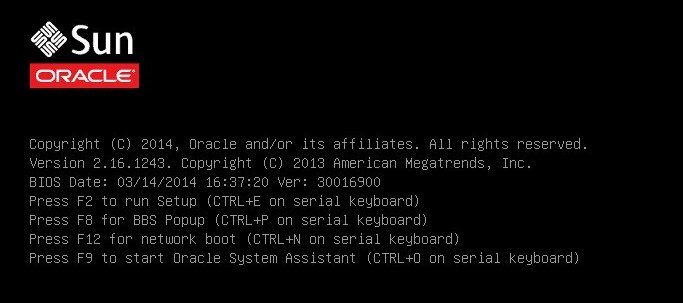
Note - The next consequence occurs very speedily; therefore, focused attention is needed for the following steps. Watch advisedly for these messages as they appear on the screen for a cursory time. You lot might want to enlarge the size of your screen to eliminate curlicue bars.
-
- In the BIOS screen, press the F8 key to specify a temporary kicking device for the Windows OSinstallation.
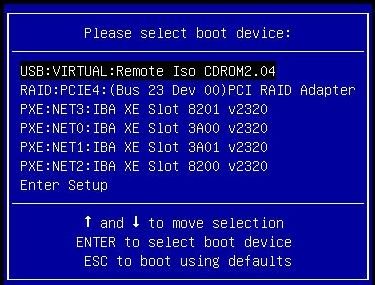
[Boot Pop Up Menu Selected] appears at the bottom of the BIOS screen, and so the Please Select Boot Device card appears. The screen that appears will be different depending on whether y'all have the UEFI/BIOS Kicking Fashion configured for Legacy BIOS or UEFI.
-
For Legacy BIOS manner, a screen similar to the following appears:
-
For UEFI way, a screen like to the following appears:
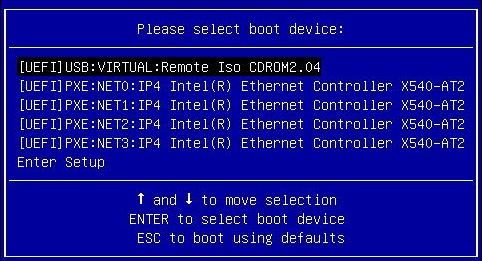
Note - The Please Select Boot Device menu that appears in your installation might differ depending on the type of disk controller and other hardware, such as PCIe network cards, installed in your server.
-
- In the Please Select Kick Device menu, select the menu item according to the Windows media installation method and UEFI/BIOS kicking mode you elected to apply, and then printing Enter.
For instance, If you elected to use the Oracle ILOM Remote Organization Console Plus application delivery method, select USB:VIRTUAL: Remote Iso CDROM2.04 from the Legacy BIOS Boot Style screen or [UEFI]USB:VIRTUAL: Remote Iso CDROM2.04 from the UEFI Boot Way screen.
- If prompted with Press any cardinal to boot from CD, printing any central.
The Windows installation sorcerer starts and the Loading Files screen appears.
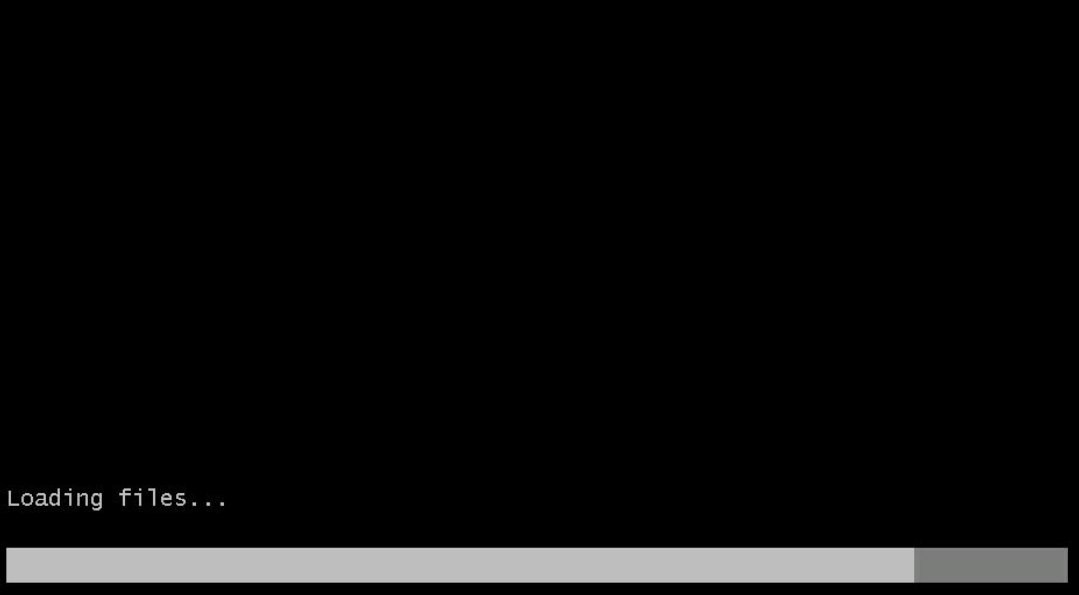
The Windows installation sorcerer continues until the Language Localization dialog appears.
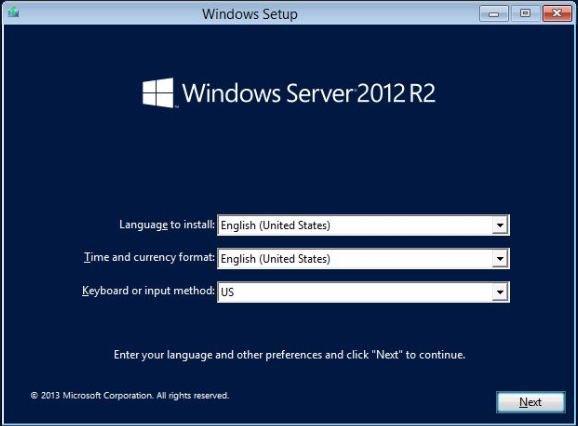
- Select your language and other preferences, then click Next to continue.
The Install Now screen appears.
Note -The Install Now screen allows y'all to go along the installation or admission an optional Repair menu (see lower left of the screen) for troubleshooting.
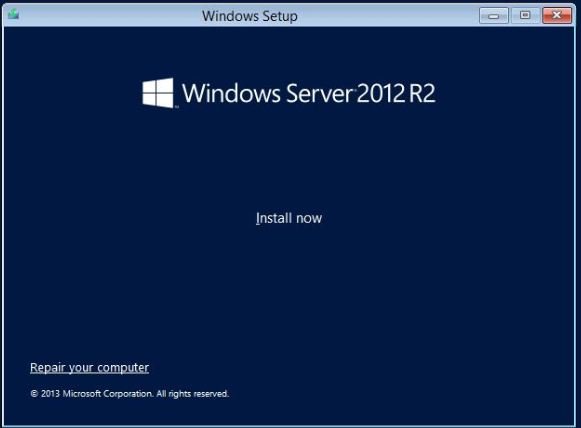
- Click Install now.
The Setup Is Starting screen appears.
So the Select the Operating Organisation dialog appears.
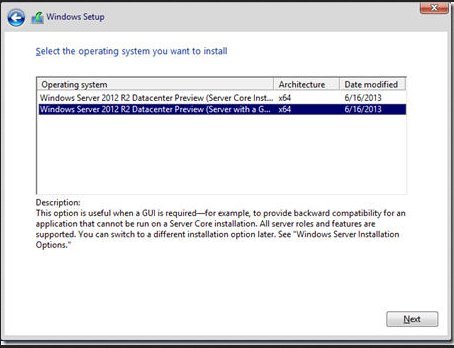
- In the Select Operating System dialog, select the desired operating organisation, so click Adjacent to continue.
For about installs, select Windows Server 2012 (or 2012 R2) Datacenter (Server with GUI) at the bottom of the list.
For more data on the different types of Windows operating systems, encounter the Windows Server 2012 or 2012 R2 documentation at http://technet.microsoft.com/en-us/windowsserver/default.aspx.
The License Terms screen appears.
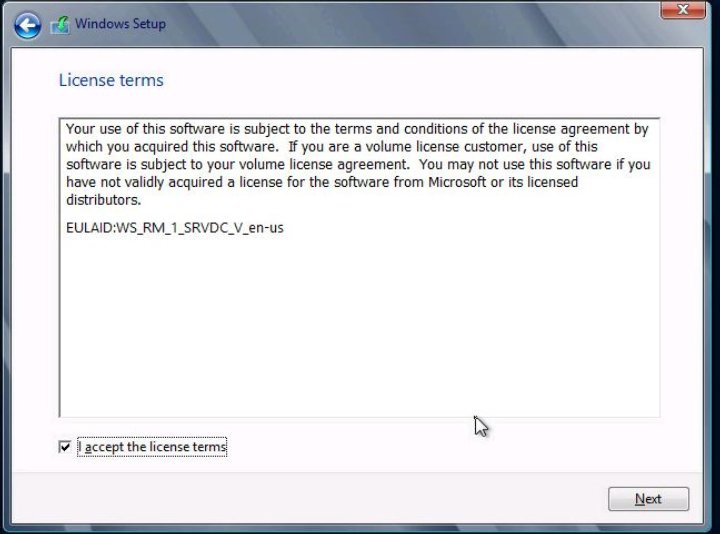
- In the License Terms screen, check the I accept the license terms box, and then click Next to continue.
The Which Type of Installation Do You Want dialog appears.
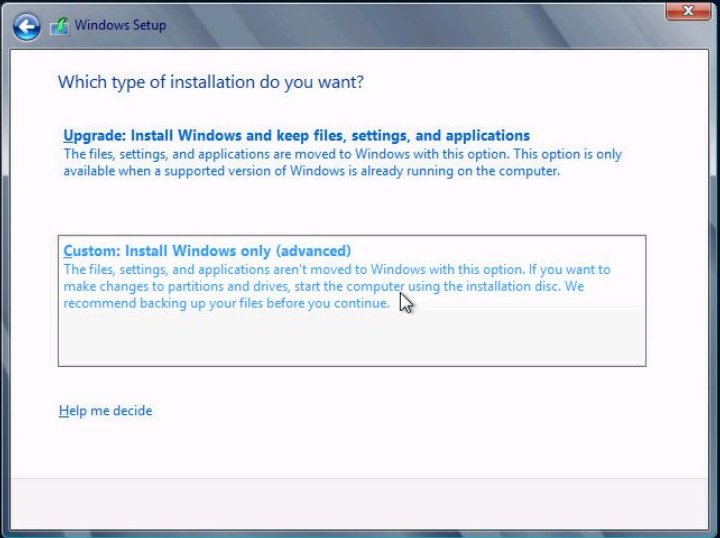
- For all new installations, in the Which Type of Installation Do You Desire dialog, click Custom: Install Windows only (avant-garde)
The Where Do Yous Desire to Install Windows dialog appears.
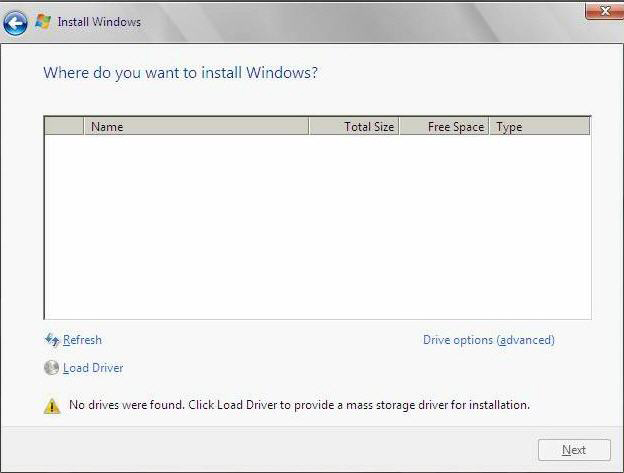
- In the Where Do You lot Want to Install Windows dialog, perform one of the following tasks:
-
(This job merely applies to Windows Server 2012 installations) If you practise not see any storage targets listed and accept a Oracle Storage 12 Gb/south SAS PCIe HBA External card configured on your server, click Load Driver to display the Load Driver dialog, then proceed to Step 12 .
-
If you run across the storage target where you lot want to install the operating system simply want to change the default partition settings associated with that target, select the target, click Drive Options (Avant-garde), then go along to Step 13 .
-
If you see the storage target where you want to install the operating system and do not want to change the default sectionalization settings for that target, select the target and click Next, then proceed to Step 14 .
-
- In the Load Driver dialog, do the following:
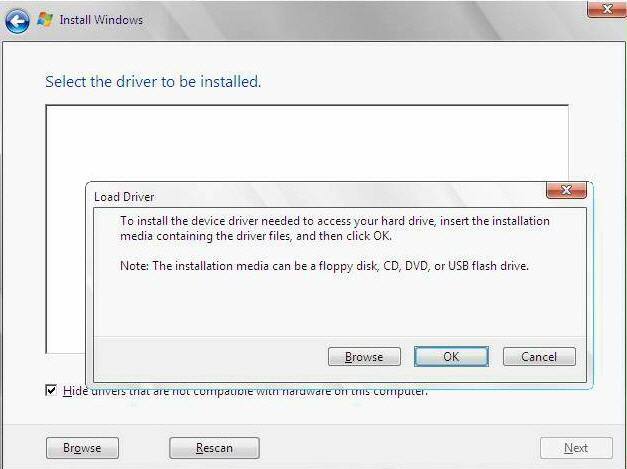
- Ensure that the drivers are accessible according to the installation method chosen (described in Selecting the Boot Media Option).
For example:
-
Storage drivers are on a disk mounted as a device from the remote console.
-
Storage drivers are on a local physical storage media, such as the Oracle Organization Banana USB flash drive (if installed), which is mounted internally in the server'south chassis; a CD/DVD; or virtual media mounted from the remote console.
-
- In the Load Commuter dialog, click Browse to navigate to the appropriate driver media folder equally described below.
-
For a organization configured with the Oracle Storage 12 Gb/southward SAS PCIe HBA External option, navigate to the following directory on the internal Oracle System Banana USB wink drive to load the appropriate driver: Windows/2012/Drivers/LSI-HBA-MPT3.
-
- In the Browse for Folder dialog, select the advisable driver, then click OK to load the driver.
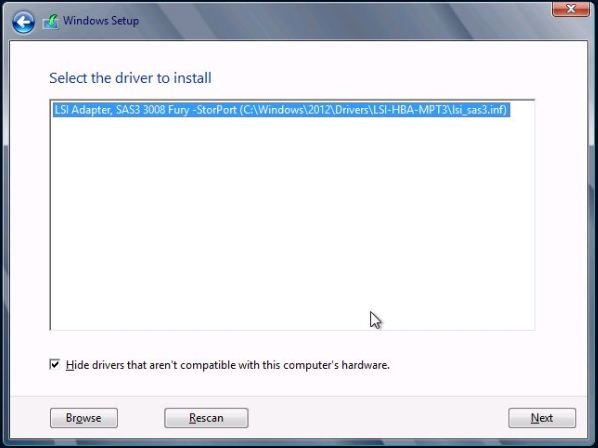
The selected driver appears in the Select the Driver to Install dialog.
For example:
- In the Select the Driver to Install dialog, click Adjacent to install the driver.
The Where Do You Want to Install Windows dialog appears.
Annotation - If yous previously removed or unmounted the Windows Server install media to load the drivers from the internal Oracle System Assistant USB flash drive, you might run into the post-obit message:
Windows Cannot be installed to this disk.If this message appears, insert or re-mount the Windows install media, then click Refresh.
- In the Where Do You lot Desire to Install Windows dialog, do one of post-obit:
-
Select the storage target listed and click Side by side to install the operating organisation, and so continue to Stride 14 .
-
If any partitions be on your target disk, it is recommended that you allow the setup process to create the appropriate partitions. To delete preexisting partitions, proceed to Step xiii .
-
- Ensure that the drivers are accessible according to the installation method chosen (described in Selecting the Boot Media Option).
- (Partition Drive, advanced) In the lower portion of the Where Do Y'all Desire to Install Windows dialog, do the post-obit:
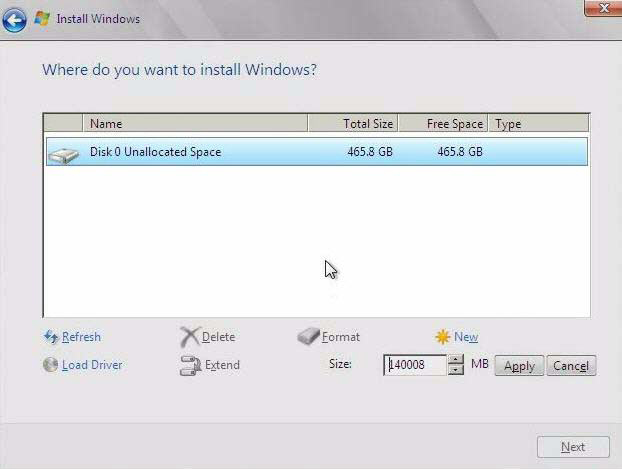
- Click Delete to delete the selected storage target existing partition configuration.
A confirmation window appears
- Click OK to confirm the partitioning deletion.
- If any additional partitions exist on the target disk, repeat Footstep a and Footstep b.
- Click Delete to delete the selected storage target existing partition configuration.
- Select (highlight) the deejay to which you want to install Windows, and then click Side by side.
The Installing Windows screen appears.
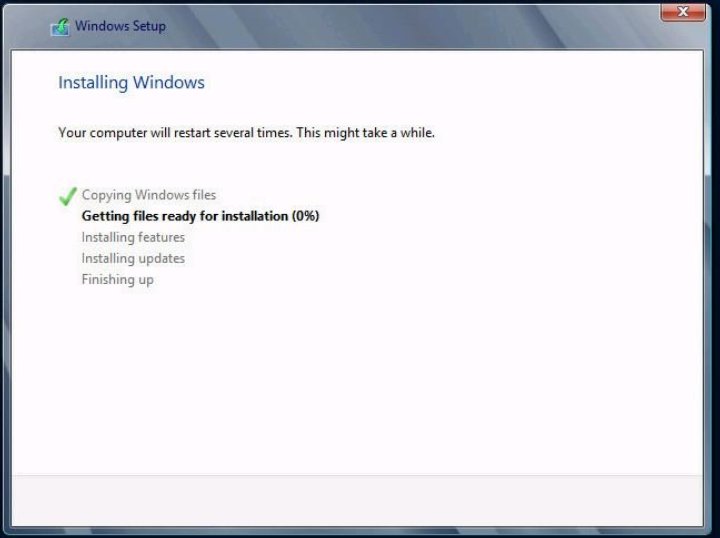
The setup and installation procedure begins and files are copied to the target.
The Windows Needs to Restart to Proceed screen appears.
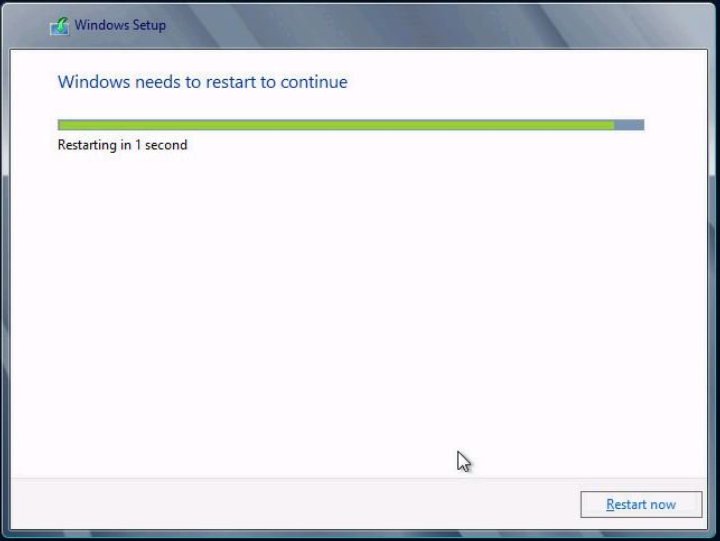
The system reboots.
- Afterwards the organization reboots, wait while the Getting Devices Set up screen appears and the Windows Installation Sorcerer configures the device settings.
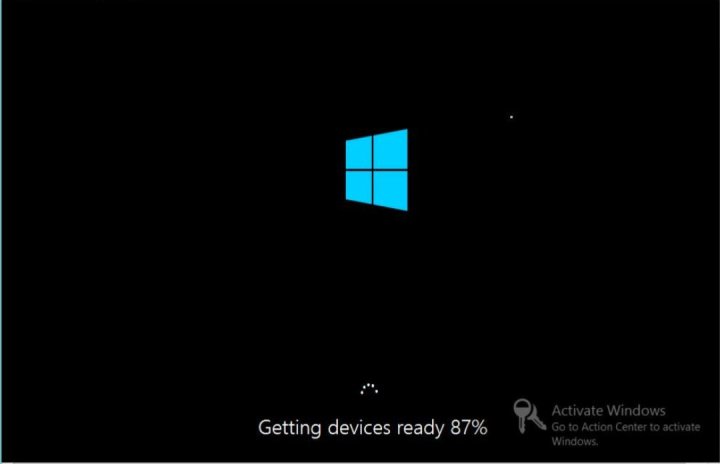
After the devices are configured, the system reboots once more and the Settings screen appears.
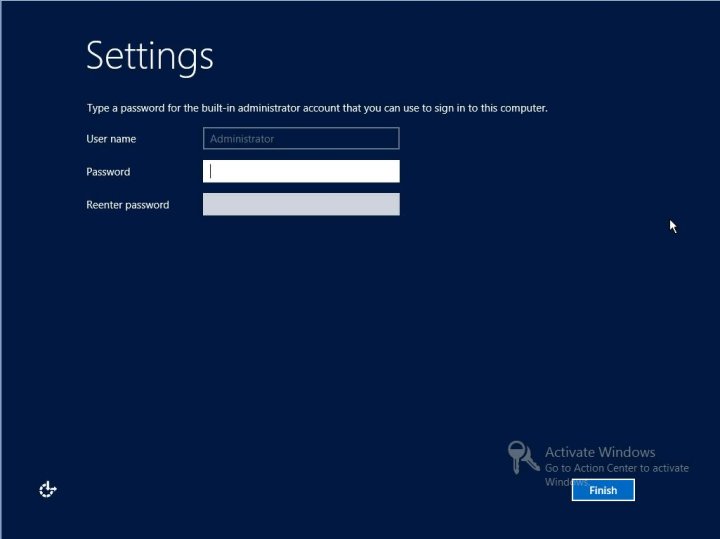
- Enter the Administrator user name and password, then click Finish.
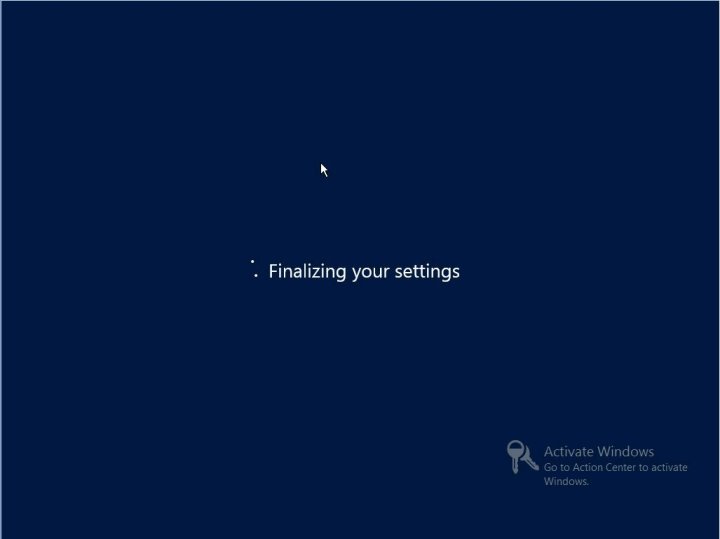
The Finalizing Your Settings screen appears.
This screen indicates that the Windows Os has been installed.
- After the installation completes, type Ctrl+Alt+Delete to log in.
The Administrator login screen appears.
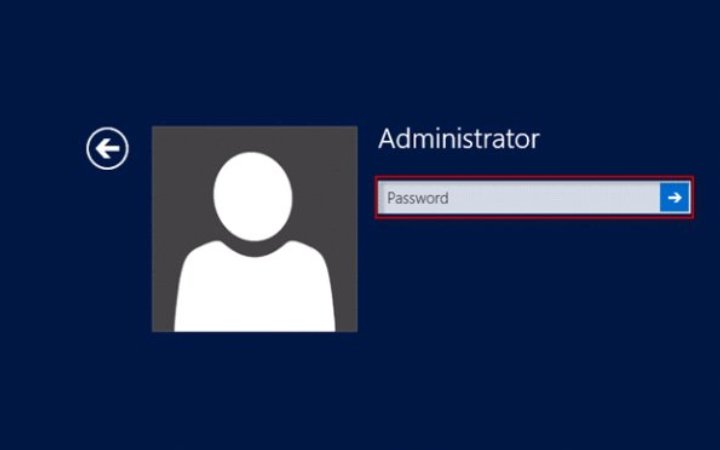
- Enter the Administrator countersign, then click the arrow to log in.
The Windows Server desktop appears.
This completes the installation.
- Proceed to Mail Installation Tasks for Windows Server and perform the post installation tasks.
Source: https://docs.oracle.com/cd/E41059_01/html/E48318/z400046a1475491.html
Posted by: mckellarwarried.blogspot.com
0 Response to "Windows Server 2012 R2 How To Install"
Post a Comment